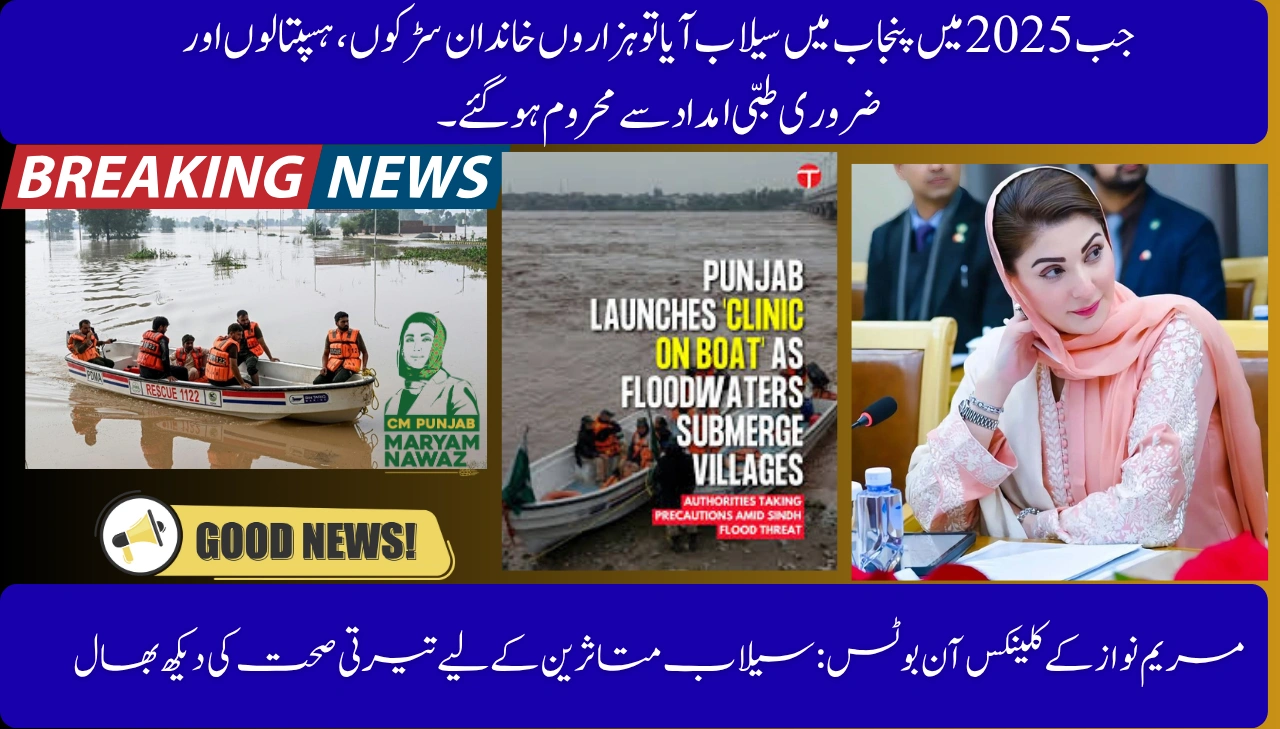
When floods hit Punjab in 2025, thousands of families were cut off from roads, hospitals, and essential medical care. The rising waters turned entire districts into islands, making it nearly impossible for doctors to reach those in need. To tackle this emergency, Punjab Chief Minister Maryam Nawaz introduced a bold new idea — the Clinics-on-Boats Service 2025.
This unique project takes healthcare directly to flood-affected people by transforming boats into floating medical clinics. Instead of waiting for patients to reach hospitals, the hospitals now reach them.
What Is the Clinics-on-Boats Service?
The Clinics-on-Boats Service is a mobile health program designed specifically for disaster zones. Each boat is set up like a mini-hospital, carrying doctors, nurses, medicines, and even diagnostic facilities. These floating clinics travel across submerged villages, providing free treatment and life-saving support.
The concept is simple but powerful: if people cannot come to healthcare, healthcare must go to them.

Why It Matters in 2025
Punjab’s floods this year displaced over 36,000 people and damaged nearly 5,000 villages. Families were left without clean water, food supplies, or medical aid. Vulnerable groups — especially pregnant women, children, and the elderly — faced the highest risks.
On top of displacement, waterborne diseases like cholera, malaria, and diarrhea began spreading rapidly. Without urgent action, the crisis could have turned into a full-scale health disaster. The floating clinics became a lifeline, ensuring that no one was abandoned during these difficult times.
Who Can Use the Service?
The best part about the Clinics-on-Boats is its open access. There are no forms to fill, no online registration, and no deadlines. Anyone living in flood-hit districts can walk up to a medical boat and receive treatment.
While all patients are welcome, the service gives special priority to:
-
Pregnant and lactating women
-
Newborns and children
-
Elderly citizens
-
Patients with long-term illnesses like diabetes or asthma
Services Offered on the Floating Clinics
Each medical boat is fully equipped to handle a wide range of healthcare needs. Services include:
-
Maternal care: Regular check-ups, maternity kits, emergency referrals
-
Child healthcare: Vaccinations, nutrition screening, pediatric treatment
-
Disease treatment: Medicines for malaria, cholera, diarrhea, skin infections, and stomach problems
-
Essential medicines: Free antibiotics, ORS, pain relief, and antiseptics
-
Emergency support: Ambulance services for critical patients, linked with hospitals and health centers
This means families don’t just get basic medicine but also specialized care tailored to their needs.
How People Can Access It
The process is straightforward. The government identifies the worst-affected areas and dispatches boats immediately. Residents don’t need to apply; they can simply approach the boats when they arrive. If a patient requires advanced treatment, they are shifted via ambulance to the nearest hospital.
The service will continue until floodwaters recede and normal hospital access is restored. Fuel, medicine, and supplies are fully guaranteed by the Punjab government throughout the program.
A Part of a Bigger Vision
Maryam Nawaz has described this initiative as more than just flood relief. It is part of her broader plan to improve healthcare access, strengthen emergency systems, and protect vulnerable communities during crises. Alongside floating clinics, her government is also working on affordable healthcare centers, fair food pricing, and stronger disaster response mechanisms.
This approach shows a vision not only for short-term aid but also for long-term resilience and stability.

Conclusion
The Clinics-on-Boats Service 2025 is a shining example of how innovation can save lives during disasters. By turning boats into floating hospitals, Punjab’s government has ensured that even the most remote and stranded families have access to doctors, medicines, and hope.
In a year defined by hardship, this project stands as a symbol of compassion, leadership, and creative problem-solving. It proves that when challenges rise — quite literally with the floodwaters — solutions can rise with them.